Expanding the Phenotypic Spectrum of KCNT2-Related Encephalopathy: A Novel De Novo Stop-Gain Variant with Coffin–Siris–Like Features
Abstract
Pathogenic variants in KCNT2 have recently been recognized as a rare cause of Developmental and Epileptic Encephalopathy (DEE- 57), characterized by early-onset refractory seizures and severe neurodevelopmental impairment, with only a limited number of cases reported worldwide. We describe a 7-month-old female infant, born to non-consanguineous parents, who presented with recurrent afebrile seizures since the neonatal period, global developmental delay, failure to thrive, and microcephaly. Seizures began on day 6 of life and evolved into drug-resistant epilepsy with multifocal onset. On examination, the child exhibited dysmorphic features including cleft palate, hirsutism, thick eyebrows, long eyelashes, broad nasal tip, smooth philtrum, and spatulate fingers. Electroencephalography revealed multifocal epileptiform discharges with migrating seizure activity, while neuroimaging showed only minor birth-related hemorrhages. Whole exome sequencing identified a novel heterozygous nonsense variant in KCNT2 (c.2836A>T; p.Lys946Ter), consistent with developmental and epileptic encephalopathy-57. In addition, a variant of uncertain significance in ARID1A was detected, raising the possibility of phenotypic overlap with Coffin–Siris–like features. The child required multiple anti-seizure medications with only partial seizure control and persistent developmental delay. This case expands the genotypic and phenotypic spectrum of KCNT2-related encephalopathy and highlights a potential syndromic overlap, emphasizing the importance of comprehensive genetic evaluation in infants with early-onset refractory epilepsy.
Introduction
Developmental and Epileptic Encephalopathies (DEEs) comprise a group of severe neurodevelopmental disorders characterized by early-onset, treatment-resistant seizures and progressive impairment of cognitive and motor functions. Recent advances in next-generation sequencing have identified several genetic etiologies underlying these disorders, particularly involving ion channel–related genes. Among these, KCNT2, which encodes a sodium-activated potassium channel subunit (KNa1.2), has emerged as a rare but important contributor to early infantile epileptic syndromes. Pathogenic variants in KCNT2 have been associated with a spectrum of clinical presentations, including epilepsy of infancy with migrating focal seizures and infantile spasms, often accompanied by global developmental delay. However, the number of reported cases remains limited, and the phenotypic spectrum is still evolving. Emerging evidence suggests significant heterogeneity, with variable neurological and extra- neurological manifestations, indicating that the full clinical profile of KCNT2-related disorders is yet to be clearly delineated. In this context, we report an infant with early-onset refractory seizures, developmental delay, and dysmorphic features, contributing to the expanding clinical spectrum of KCNT2-associated encephalopathy and highlighting the role of comprehensive genetic evaluation in such complex presentations.
Case Presentation
A 7-month-old female infant, born to non-consanguineous parents, presented with recurrent afebrile seizures. The current episode consisted of three generalized tonic seizures lasting 30 to 45 seconds, associated with postictal drowsiness. There was no history of fever, trauma, or preceding illness. The child had a significant neonatal history of seizures beginning on day 6 of life, requiring admission to the neonatal intensive care unit. At that time, hypoglycemia was documented and corrected; however, given the persistence of seizures beyond metabolic correction and abnormal electroencephalographic findings, she was initiated on phenobarbitone and continued on therapy until 2 months of age. Neonatal EEG reportedly showed a discontinuous background with multifocal epileptiform discharges, suggestive of an underlying epileptic encephalopathy rather than purely metabolic seizures.
Following a transient seizure-free period, the child developed recurrent seizures from early infancy, with increasing frequency and poor response to monotherapy, raising concerns for drug- resistant epilepsy. Differential diagnoses considered at this stage included early infantile epileptic encephalopathy (including epilepsy of infancy with migrating focal seizures), structural brain injury, inborn errors of metabolism, and genetic epileptic syndromes. She was born at term by forceps-assisted vaginal delivery, with a birth weight of 2.5 kg, and an uneventful antenatal history. There was no history of maternal infections, teratogenic exposures, or family history of seizures or neurodevelopmental disorders. Developmentally, the child had global delay. At 7 months of age, she had not achieved head control. She was able to fix and follow visually and had attained a social smile, but had significant delay in gross motor and language domains. There was associated failure to thrive.
On examination, the child was hemodynamically stable. Anthropometry revealed microcephaly (head circumference ≤ 3 SD) and undernutrition. Dysmorphic features included cleft palate, hirsute extremities, thick eyebrows, long eyelashes, broad nasal tip, smooth philtrum, and spatulate fingers with deep-set nails. Musculoskeletal examination revealed a positive Galeazzi sign suggestive of developmental dysplasia of the hip. The abdomen was distended, and a gastrostomy tube was present. Neurologically, the child was irritable with preserved tone and no focal deficits. Laboratory evaluation including complete blood count, serum electrolytes, calcium, magnesium, renal and liver function tests, and metabolic screening was within normal limits. Electroencephalography at the time of current admission demonstrated a diffusely slowed background with multifocal epileptiform discharges and independent seizure activity arising from different cortical regions, with migration across hemispheres, consistent with a severe epileptic encephalopathy phenotype. Magnetic resonance imaging of the brain revealed thin extra-axial hemorrhages along the posterior fossa and parieto- occipital regions, likely related to birth trauma, without major structural abnormalities. Echocardiography showed a small ventricular septal defect and patent foramen ovale. Ultrasound of the hips confirmed developmental dysplasia. Karyotyping was normal. The laboratory and diagnostic investigations are summarized in Table 1 (Figure 1).
During hospitalization, the child continued to have breakthrough seizures despite escalation of anti-seizure medications, including levetiracetam and phenobarbitone, consistent with drug-resistant epilepsy. Given the normal metabolic and structural workup, a genetic etiology was strongly suspected.
Whole Exome Sequencing (WES) was performed using next-generation sequencing on an Illumina platform with a mean sequencing depth of >100×. Genomic DNA extracted from peripheral blood underwent targeted capture of coding regions, followed by sequencing and bioinformatic analysis. Sequence reads were aligned to the human reference genome (GRCh38) using the Burrows–Wheeler Aligner (BWA), and variant calling was performed using the GATK/Sentieon pipeline. Variant annotation was carried out using the Variant Effect Predictor (VEP) against Ensembl gene models. Clinically relevant variants were filtered based on allele frequency in population databases including gnomAD, 1000 Genomes, TOPMed, and internal population datasets, and correlated with phenotype using ClinVar, OMIM, HGMD, and DECIPHER databases [1].
Table 1: Summary of laboratory and diagnostic investigations highlighting normal metabolic and structural evaluation, with electroencephalographic and genetic findings supporting a diagnosis of developmental and epileptic encephalopathy.
| Laboratory parameter | Value | Normal range |
|---|---|---|
| Hemoglobin (g/dL) | Within normal limits | 10.5-13.5 |
| Total leukocyte count (cells/cumm) | 14,800 | 5,000-15,000 |
| Differential count (N/L) | Neutrophil predominant | - |
| Platelets (lakhs/cumm) | Normal | 1.5-4.5 |
| C-reactive protein (mg/L) | 16.2 (elevated) | <5 |
| Blood glucose (mg/dL) | 128 | 70-140 |
| Serum sodium (mEq/L) | Normal | 135-145 |
| Serum potassium (mEq/L) | Normal | 3.5-5.5 |
| Calcium (mg/dL) | Normal | 8.5-10.5 |
| Magnesium (mg/dL) | Normal | 1.5-2.5 |
| Phosphorus (mg/dL) | Normal | 4-7 |
| Renal function tests | Normal | - |
| Liver function tests | Normal | - |
| Sepsis screen | Negative | - |
| Tandem mass spectrometry | Normal | - |
| Electroencephalogram (EEG) | Generalized spike–wave discharges with chaotic background activity | - |
| MRI brain | Mild extra-axial hemorrhages; no structural abnormality | - |
| Echocardiography | Small VSD (2 mm - 3 mm), PFO | - |
| Ultrasound hip | Developmental dysplasia of hip | - |
| Karyotype | Normal female karyotype | - |
| Whole exome sequencing | KCNT2 pathogenic variant; ARID1A VUS | - |
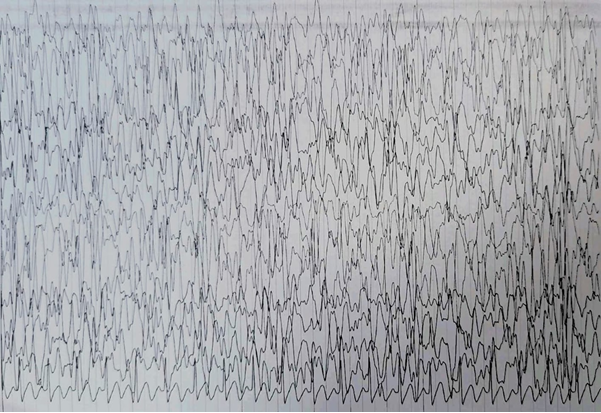
Figure 1: Electroencephalogram showing generalized epileptiform spike–wave discharges with markedly disorganized, high-amplitude background activity, indicative of a severe developmental and epileptic encephalopathy.
The identified variant in the KCNT2 gene (ENST00000294725.14) was a heterozygous nonsense variant located in exon 25 [c.2836A>T; p.Lys946Ter; chr1:g.196280934T>A; read depth: 42×], predicted to introduce a premature stop codon leading to truncation of the protein. This variant was absent in population databases including gnomAD and 1000 Genomes. In silico prediction tools, including MutationTaster2, suggested a damaging effect, and the affected residue was evolutionarily conserved. The variant was classified as likely pathogenic according to the American College of Medical Genetics and Genomics (ACMG) criteria, fulfilling PVS1 (null variant in a gene where loss-of-function is a known disease mechanism) and PM2 (absent in population databases).
Additionally, a heterozygous missense variant in the ARID1A gene (ENST00000324856.13) [c.5570C>T; p.Thr1857Ile] was identified. This variant was absent in major population databases and predicted to be deleterious by multiple in silico tools including SIFT, PolyPhen-2, and LRT. However, due to insufficient clinical and functional evidence, it was classified as a Variant of Uncertain Significance (VUS) based on ACMG criteria (PM2, PP3) [2].
At first follow-up (1-month post-discharge), the child continued to have intermittent breakthrough seizures, though reduced in frequency. Weight gain remained suboptimal, and developmental progress was minimal. At second follow-up (3 months), seizures persisted with clustering episodes, and an additional anti-seizure medication was planned. Brainstem Evoked Response Audiometry (BERA) was planned to assess hearing, and ophthalmological evaluation was advised to rule out visual impairment, given the risk of sensory deficits in epileptic encephalopathies. Orthopedic follow-up was continued for developmental dysplasia of the hip. The child was planned for optimization of anti-seizure therapy, consideration of ketogenic diet, and enrollment in early intervention programs including physiotherapy and developmental therapy. Genetic counseling was provided to the family regarding prognosis, recurrence risk, and the need for parental testing.
Discussion
With the advent of next-generation sequencing, several genetic causes of DEE have been identified, particularly involving ion channel dysfunction, leading to the concept of epileptic channelopathies [3].
Among these, KCNT2 has emerged as a rare but distinct genetic cause of early infantile epileptic encephalopathy [3]. The KCNT2 gene encodes the sodium-activated potassium channel subunit KNa1.2, which plays an important role in regulating neuronal excitability by contributing to membrane repolarization during periods of increased neuronal firing [4]. Activation of these channels by intracellular sodium provides a negative feedback mechanism to limit excessive neuronal discharge. Pathogenic variants in KCNT2 disrupt this regulatory mechanism, resulting in abnormal neuronal firing patterns and epileptogenesis [5]. Unlike classical potassium channel disorders, KCNT2-related disease demonstrates functional heterogeneity, with both gain-of- function and loss-of-function variants reported in the literature [6]. This variability in channel behavior is thought to contribute to the wide clinical spectrum observed in affected individuals.
Clinically, KCNT2-related encephalopathy is characterized by early-onset seizures, often presenting in the neonatal period or early infancy, and typically evolving into drug-resistant epilepsy [3]. Electroencephalographic findings described in previous reports include multifocal epileptiform discharges and patterns consistent with Epilepsy of Infancy with Migrating Focal Seizures (EIMFS), reflecting a diffuse epileptic network [7]. The evolution of electroencephalographic abnormalities over time, from early background discontinuity to later multifocal and migrating epileptiform activity, suggests a dynamic and progressive disturbance of cortical networks. A major clinical challenge is the early attribution of seizures to metabolic or perinatal causes. Transient metabolic abnormalities, such as hypoglycemia, may coexist and lead to initial diagnostic anchoring. However, persistence of seizures beyond correction and the presence of abnormal background activity should prompt early evaluation for an underlying genetic etiology [8]. This distinction is critical, as delayed diagnosis may impact counseling and long-term management planning.
Comparison with KCNT1-related epilepsies provides further insight into disease mechanisms. Both KCNT1 and KCNT2 encode sodium-activated potassium channels and are associated with similar electroclinical phenotypes, particularly EIMFS. However, KCNT1 mutations are more consistently associated with gain- of-function effects, whereas KCNT2 mutations demonstrate broader functional diversity, suggesting distinct but converging mechanisms of neuronal hyperexcitability [9]. From a therapeutic perspective, seizures associated with KCNT2 mutations are frequently refractory to conventional anti-seizure medications. While quinidine has been explored as a targeted therapy in KCNT1 gain-of-function mutations due to its potassium channel blocking properties, its efficacy in KCNT2-related disorders remains uncertain and likely depends on the specific functional impact of the variant [9]. Extra-neurological features in KCNT2- related disorders have been inconsistently reported, and their significance remains unclear. The presence of dysmorphic features in this case raises the possibility of phenotypic expansion. The identification of an additional variant in ARID1A, a gene associated with Coffin–Siris syndrome, suggests a potential role for genetic modifiers. Although currently classified as a variant of uncertain significance, such co-existing variants may influence phenotypic expression and contribute to blended or overlapping syndromes [10].
The coexistence of a variant in the ARID1A gene introduces the possibility of a blended or modified phenotype. ARID1A encodes a key component of the SWI/SNF chromatin-remodeling complex and is implicated in Coffin–Siris syndrome, characterized by developmental delay, coarse facial features, feeding difficulties, and digital anomalies. The presence of overlapping dysmorphic features in our patient raises the possibility that the ARID1A variant may contribute to phenotypic modulation rather than representing an incidental finding. However, given its current classification as a variant of uncertain significance and the absence of segregation analysis, a definitive causal role cannot be established. Increasing recognition of dual molecular diagnoses in neurodevelopmental disorders suggests that such variants may act additively or modify the primary phenotype, highlighting the importance of comprehensive genomic interpretation [11].
Among reported cases of KCNT2-related encephalopathy (Table 2) [6,10,12-14], the phenotypic spectrum has ranged from Epilepsy of Infancy with Migrating Focal Seizures (EIMFS) and West syndrome to Lennox-Gastaut syndrome, with most patients demonstrating early-onset drug-resistant epilepsy and severe global developmental delay. Both gain-of-function and loss-of-function variants have been implicated, highlighting the functional heterogeneity of KCNT2-related disease. Extra- neurological features such as dysmorphism and hirsutism have been reported in a subset of cases, particularly those with gain-of-function variants at the p.Arg190 residue. However, truncating variants with associated Coffin–Siris–like dysmorphic features, as observed in our patient, have not been previously described, representing a potential expansion of the phenotypic spectrum. Furthermore, the co-occurrence of a second variant in a syndromic gene (ARID1A) has not been reported in prior KCNT2 cases, underscoring the importance of comprehensive genomic interpretation in patients with complex or atypical presentations.
At present, management remains largely supportive, focusing on seizure control, nutritional support, and early developmental interventions. This case contributes to the limited literature on KCNT2-related encephalopathy and highlights several important aspects, including the evolving electroclinical phenotype, the potential for diagnostic delay due to coexisting metabolic factors, and the possibility of genetic interaction influencing phenotypic expression. Further accumulation of cases and functional studies will be essential to refine genotype–phenotype correlations and to explore targeted therapeutic strategies [15]. Compared to previously reported cases (Table 2) [6,10,12-14], our patient uniquely demonstrates a truncating variant with associated dysmorphic features, suggesting a possible expansion of the phenotypic spectrum [16].
Table 2: Comparative analysis of previously reported cases of KCNT2-related developmental and epileptic encephalopathy and the present case, emphasizing clinical, electroencephalographic, and genetic features.
| S. No | Case report | Year | Age/Gender | Clinical features | EEG findings | Mutation (Protein change) | Functional effect | Outcome |
|---|---|---|---|---|---|---|---|---|
| 1 | Ambrosino P et al. | 2018 | Infant/F | Early-onset seizures, developmental delay | Multifocal discharges, EIMFS pattern | Missense variant | Gain-of-function | Drug-resistant epilepsy |
| 2 | Mao X et al. | 2020 | Infant/M | Migrating focal seizures, hypotonia | Migrating epileptiform activity | KCNT2 variant | Loss-of-function | Severe developmental delay |
| 3 | Alagoz M et al. | 2020 | Infant/F | Refractory seizures, developmental delay | Multifocal spikes | Variant reported | Not specified | Poor seizure control |
| 4 | Kessi M et al. | 2020 | Infant/M | Epileptic encephalopathy, regression | Diffuse epileptiform activity | Variant reported | Mixed/uncertain | Persistent seizures |
| 5 | Gong P et al. | 2021 | Infant/F | Early infantile seizures, developmental delay | Multifocal epileptiform discharges | Variant reported | Not specified | Developmental impairment |
| 6 | Present case | 2026 | 7 months/F | Neonatal onset seizures, dysmorphism, global delay | Generalized spike–wave discharges with chaotic background | c.2836A>T (p.Lys946Ter) |
Likely loss-of-function | Drug-resistant epilepsy with syndromic features |
Conclusion
This case emphasizes that persistent or evolving seizures in early infancy, even when initially associated with correctable metabolic disturbances, should prompt early consideration of an underlying genetic epileptic encephalopathy. KCNT2-related disorders represent a rare but severe channelopathy with dynamic electroclinical evolution and high risk of pharmacoresistance.
The coexistence of dysmorphic features and an additional genetic variant in this patient suggests a broader and potentially modified phenotypic spectrum, highlighting the complexity of genotype–phenotype interactions. Early use of genomic testing in such presentations is critical not only for diagnosis but also for avoiding diagnostic delay and guiding long-term management and counseling. Accumulation of similar cases will be essential to better define disease mechanisms and explore future targeted therapies.
Learning Points
Persistence of seizures beyond correction of hypoglycemia should immediately raise suspicion for an underlying genetic epileptic encephalopathy.
Abnormal neonatal EEG background is a critical early clue distinguishing primary epileptic encephalopathy from acute symptomatic seizures.
KCNT2-related epilepsy shows evolving electroclinical patterns, often progressing to multifocal and migrating seizure activity.
Drug resistance early in the disease course is a hallmark of KCNT2-associated encephalopathy.
Dysmorphism in an infant with epilepsy should trigger evaluation for blended or syndromic genetic disorders.
Co-existing variants (e.g., ARID1A) may modify phenotype and explain atypical or expanded clinical features.
Early exome sequencing is not optional in refractory infantile epilepsy-it is diagnostically decisive.
Multisystem evaluation (neurological, developmental, auditory, visual) is essential for comprehensive care and prognostication.
Acknowledgment
The authors would like to acknowledge the patient’s family for their cooperation and consent for publication. We also thank the clinical and nursing staff involved in the care of this patient.
Consent Confirmation
Written informed consent was obtained from the legal guardian of the patient for the publication of this case repor, including all clinical details and images. A copy of the signed consent form is available for editorial review upon request.
Author Contributions
Dr. Hari Prasath C contributed to patient management, data collection, literature review, and drafting of the manuscript. Dr. P Anil Kumar contributed to conceptualization, supervision, critical revision of the manuscript, and final approval. All authors read and approved the final manuscript.
References
- Li H, Durbin R. Fast and accurate short read alignment with Burrows-Wheeler Aligner. Bioinformatics. 2009;25(14):1754-60. PubMed ↗
- Richards S, Aziz N, Bale S, Bick D, Das S, Gastier-Foster J, et al. Standards and guidelines for the interpretation of sequence variants: A joint consensus recommendation of the American College of Medical Genetics and Genomics and the Association for Molecular Pathology. Genet Med. 2015;17(5):405-24. PubMed ↗
- Gururaj S, Palmer EE, Sheehan GD, Kandula T, Macintosh R, Ying K, et al. A de novo mutation in the sodium-activated potassium channel KCNT2 alters ion selectivity and causes epileptic encephalopathy. Cell Rep. 2017;21(4):926-33. PubMed ↗
- Bhattacharjee A, Joiner WJ, Wu M, Yang Y, Sigworth FJ, Kaczmarek LK. Slick (Slo2.1), a rapidly-gating sodium-activated potassium channel inhibited by ATP. J Neurosci. 2003;23(37):11681-91. PubMed ↗
- Barcia G, Fleming MR, Deligniere A, Gazula VR, Brown MR, Langouet M, et al. De novo gain-of-function KCNT1 channel mutations cause malignant migrating partial seizures of infancy. Nat Genet. 2012;44(11):1255-9. PubMed ↗
- Mao X, Bruneau N, Gao Q, Becq H, Jia Z, Xi H, et al. The epilepsy of infancy with migrating focal seizures: Identification of de novo mutations of the KCNT2 gene that exert inhibitory effects on the corresponding heteromeric KNa1.1/KNa1.2 potassium channel. Front Cell Neurosci. 2020;14:1. PubMed ↗
- Malerba F, Alberini G, Balagura G, Marchese F, Amadori E, Riva A, et al. Genotype-phenotype correlations in patients with de novo KCNQ2 pathogenic variants. Neurol Genet. 2020;6(6):e528. PubMed ↗
- Weckhuysen S, Ivanovic V, Hendrickx R, Coster RV, Hjalgrim H, Møller RS, et al. Extending the KCNQ2 encephalopathy spectrum: Clinical and neuroimaging findings in 17 patients. Neurology. 2013;81(19):1697-703. PubMed ↗
- Villa C, Combi R. Potassium channels and human epileptic phenotypes: An updated overview. Front Cell Neurosci. 2016;10:81. Frontiers ↗
- Kessi M, Chen B, Peng J, Tang Y, Olatoutou E, He F, et al. Intellectual disability and potassium channelopathies: A systematic review. Front Genet. 2020;11:614. PubMed ↗
- Karaca E, Harel T, Pehlivan D, Jhangiani SN, Gambin T, Coban Akdemir Z, et al. Genes that affect brain structure and function identified by rare variant analyses of Mendelian neurologic disease. Neuron. 2015;88(3):499-513. PubMed ↗
- Ambrosino P, Soldovieri MV, Bast T, Turnpenny PD, Uhrig S, Biskup S, et al. De novo gain-of-function variants in KCNT2 as a novel cause of developmental and epileptic encephalopathy. Ann Neurol. 2018;83(6):1198-204. PubMed ↗
- Alagoz M, Kherad N, Bozkurt S, Yuksel A. New mutations in KCNT2 gene causing early infantile epileptic encephalopathy type 57: Case study and literature review. Acta Biochim Pol. 2020;67(3):431-4. PubMed ↗
- Gong P, Jiao X, Yu D, Yang Z. Case report: Causative de novo variants of KCNT2 for developmental and epileptic encephalopathy. Front Genet. 2021;12:649556. PubMed ↗
- Cui F, Wulan T, Zhang Q, Zhang VW, Jiang Y. Identification of a novel KCNT2 variant in a family with developmental and epileptic encephalopathies: A case report and literature review. Front Genet. 2024;15:1371282. PubMed ↗
- McTague A, Howell KB, Cross JH, Kurian MA, Scheffer IE. The genetic landscape of the epileptic encephalopathies of infancy and childhood. Lancet Neurol. 2016;15(3):304-16. PubMed ↗