-
By administrator
- In Zenith Publications
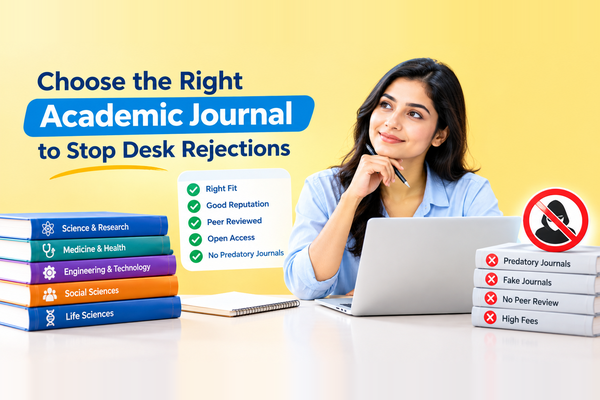
Submitting your research to the wrong academic journal can waste three to six months of your life. This delay has nothing to do with the quality of your work. It happens because the manuscript doesn’t fit the journal’s scope. You can avoid this cycle by taking control of where you send your papers. Picking the right venue helps your work get seen by people who actually care about your findings. A bad choice leads to an immediate desk rejection without any feedback. You lose time and momentum. This guide gives you a clear path to find the best fit for your research.

How to Choose the Right Journal for Your Manuscript -Avoid Predatory Journals & Desk Rejection
Match Your Manuscript to the Journal Scope
Scope mismatch is the top reason editors reject papers before they even hit peer review. If your topic doesn’t align with the journal’s goals, the editor won’t waste time sending it to reviewers. You can prevent this by doing a bit of homework first. Start by reading the “Aims and Scope” page on the journal’s website. Look for keywords that match your study. If your research focuses on a niche topic and the journal only wants broad overviews, it’s a bad match. Check the articles published in the last 12 months. Do your findings feel like they belong next to those papers? If the recent content is completely different from your work, move on to another option. You also need to check the article types they accept. Some journals only want original research and won’t touch case reports or scoping reviews. Confirming this early saves you from a quick rejection.
Prioritize Fit Over Impact Factor
Many researchers chase the highest impact factor they can find. This is often a mistake. A prestigious general journal might have a high score, but your paper might get lost in the noise. Focus on where your target audience reads. A specialized journal might have a lower impact factor but a more dedicated readership. These readers are the ones most likely to cite your work. When you prioritize fit, you increase the chance of your research having a real effect. High citations come from relevant readers, not just a fancy journal name. Always put fit before prestige.
Spot Warning Signs of Predatory Journals
There are over 18,000 predatory journals active globally in 2026. These outlets damage your reputation and steal your money. They often skip real peer review and publish anything for a fee. Watch out for these five red flags:
- Peer review promised in a few hours or days. Real clinical review takes weeks.
- Fees that only appear after the journal accepts your paper. Honest journals list all costs upfront.
- Fake metrics like “Global Impact Factor” or “Universal Impact Factor.” Only Clarivate’s Journal Citation Reports are legitimate.
- Editorial boards you can’t find on Google Scholar or university websites.
- Random emails praising your work and asking for a submission. Less than 7% of these invites are actually relevant to your field.
These journals can let fraudulent studies into systematic reviews. This puts real patients at risk and ruins the science. Stay far away from any journal that feels too easy.
Verify Indexing and Ethical Standards
Never trust a journal’s website when it claims to be indexed. Predatory publishers lie about this all the time. You must verify these claims yourself. Go directly to the database to check. Search for the journal title in PubMed, Scopus, Web of Science, or the Directory of Open Access Journals (DOAJ). If it’s not there, the claim is false. Be careful with PubMed. An article appearing in PubMed doesn’t always mean the journal is indexed in Medline. These are two different things. Make sure you know which one you need for your career goals. Before you hit the submit button, run through this final list:
- Does the scope statement cover my topic?
- Did I check the last few issues for similar work?
- Did I verify indexing in an outside database?
- Are the fees listed clearly on the site?
- Can I find the editors on Google Scholar?
- Is the review timeline measured in weeks?
- Is the journal a member of COPE or ICMJE?
If you can check every box, the journal is likely trustworthy.
Final Thoughts
Choosing the right academic journal is a strategic move. It keeps you from wasting months on desk rejections. By matching your scope, ignoring the hype of impact factors, and dodging predatory traps, you protect your work. Verify every indexing claim and check every fee before you send your manuscript. This process ensures your research reaches the people who can use it. Use the checklist provided to keep your academic career moving forward. Now, take a look at your target list and prune any journals that don’t meet these standards.