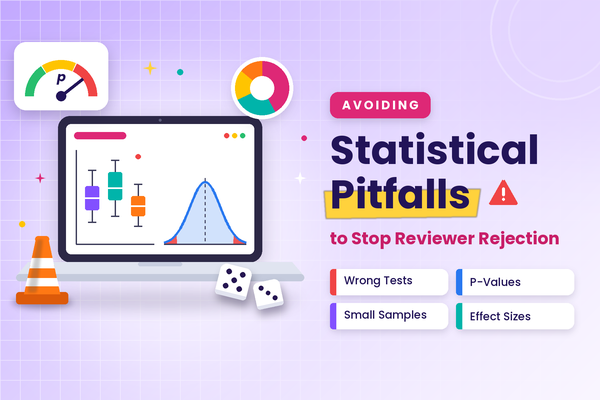
Avoiding Statistical Pitfalls to Stop Reviewer Rejection
-
By administrator
- In Zenith Publications
A great research topic doesn’t guarantee a published paper. Many authors see their work rejected not because the idea was bad, but because the math didn’t support the claims. When reviewers find a mismatch between your data and your conclusions, they lose trust in the whole study. This often leads to a quick rejection letter. […]
Read More
Write a Publishable Literature Review That Gets Accepted
-
- In Zenith Publications
Review papers are growing in number. More researchers write them than ever before. This means editors are harder to please. They don’t want a paper that just lists what other people said. You need to do more than summarize to get published. A high-impact literature review shows what we know and what we don’t. It […]
Read More
Choose the Right Academic Journal to Stop Desk Rejections
-
- In Zenith Publications
Submitting your research to the wrong academic journal can waste three to six months of your life. This delay has nothing to do with the quality of your work. It happens because the manuscript doesn’t fit the journal’s scope. You can avoid this cycle by taking control of where you send your papers. Picking the […]
Read More
Reduce Your Publishing Costs by Understanding Open Access Article Processing Charges
-
- In Zenith Publications
Some elite journals charge over $10,000 to publish a single open access article. That number scares many researchers into giving up before they even submit. You might think high fees mean better quality, but that is a myth. The global average article processing charge (APC) is actually around $1,600. Understanding how these fees work helps […]
Read More
Write a Cover Letter That Avoids Desk Rejection in Clinical Journals
-
- In Zenith Publications
Between 40% and 50% of manuscripts sent to peer-reviewed clinical journals are desk-rejected. This means the editor sends the paper back without ever showing it to a reviewer. Most researchers write their cover letter in ten minutes and never think about it again. That mistake often ends a submission before it even starts. How to […]
Read More
Write Clinical Research Abstracts That Get Cited
-
- In Zenith Publications
Up to 80% of readers only read the abstract of a clinical research paper. They skip the methods. They ignore the results section. For a busy consultant reading between patients, you have about 30 seconds to prove your work matters. If your abstract fails, your research remains invisible. Many researchers treat this section as a […]
Read More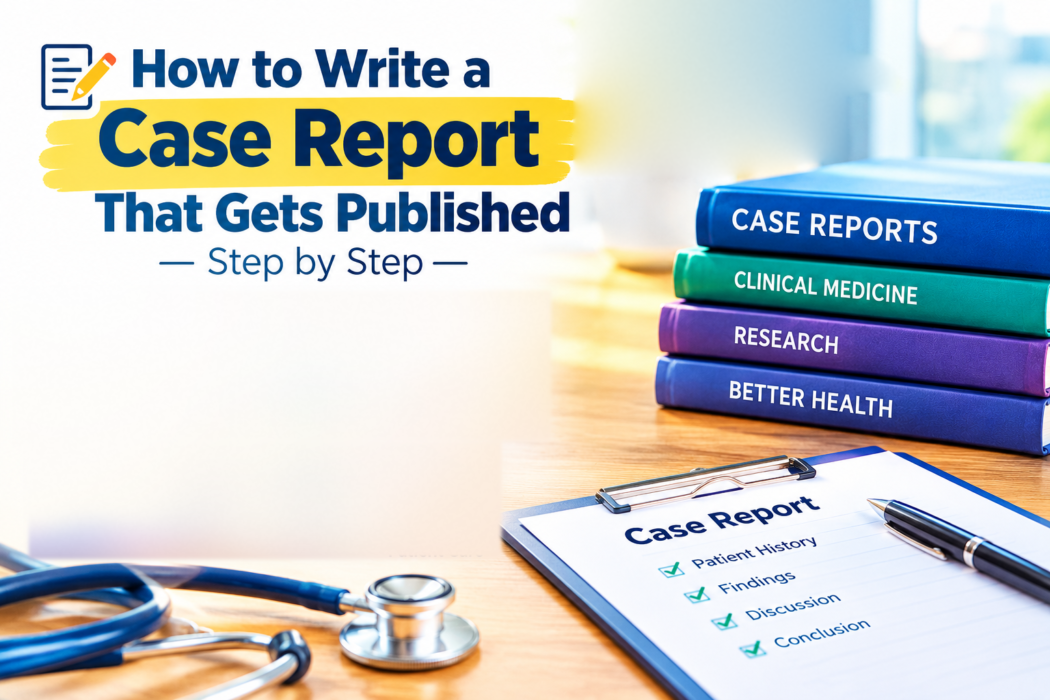
Publish a Clinically Significant Case Report to Improve Patient Care
-
- In Zenith Publications
Does your case need to be a one-in-a-million medical mystery to get published? Most residents and new doctors think so. They hold onto great clinical observations because they worry the case isn’t “interesting” enough for a journal. This thinking stops a lot of valuable knowledge from reaching other clinicians. The truth is that journals don’t […]
Read More
DOAJ’s 2026–2028 Strategy: A Turning Point for Open Access Publishing
-
- In Zenith Publications
DOAJ is signaling that as scholarly publishing grows, governance, trust, and accountability must grow with it. When I read the Directory of Open Access Journals (DOAJ) 2026–2028 strategy, my first reaction wasn’t that this was just another roadmap. It felt more like a course correction for the entire open-access ecosystem. For years, Open Access has […]
Read More
Get Your Clinical Manuscript Published Using the IMRAD Structure
-
- In Zenith Publications
Most researchers know that IMRAD stands for Introduction, Methods, Results, and Discussion. Very few of them know what each section is supposed to do. Even fewer know that writing these sections in the order they appear in the paper is a mistake. This error is one of the top reasons clinical manuscripts get rejected during […]
Read More
Stop Your Clinical Manuscript from Being Rejected with Better IMRaD Structure
-
- In Zenith Publications
Most researchers know IMRaD stands for Introduction, Methods, Results, and Discussion. Very few know what those sections are actually supposed to do. Even fewer realize that writing them in the order they appear in the final paper is a huge mistake. This habit leads to structural errors that get papers rejected before a reviewer even […]
Read More